- 15/12/2025
- Posted by: Marta
- Category: Questions and answers
Dear Dario,
Our company aims to promote the sustainability of its food packaging by referring to the use of recycled plastic. Are there specific standards to follow for these environmental claims?
Many thanks, Paul
The lawyer Dario Dongo, Ph.D. in Agri-Food Systems, answers
Dear Paolo,
Environmental claims about the sustainability of packaging are increasingly widespread and are finally also subject to specific rules, which are essential to protect consumers and the market from a plethora of misleading commercial practices (Dongo, 2023).
Empowering Consumers for the Green Transition (ECGT) Directive
The Empowering Consumers for the Green Transition (ECGT) Directive – which reforms the Unfair Commercial Practices Directive 2005/29/EC, which is implemented in Italy in the Consumer Code (Legislative Decree 206/05 and subsequent amendments) – introduced two essential definitions:
a) 'environmental assertion'Environmental claims' include all messages of a non-mandatory nature (under Union or national law), in any form – including text and figurative, graphic or symbolic representations, such as trademarks, brand names, company names or product names – where it is asserted or suggested that a particular product, product category, brand or economic operator:
- have a positive or no impact on the environment, or
- is less harmful to the environment than other products, product categories, brands or economic operators, or
- has improved its impact over time;
b) 'generic environmental assertion', understood as any 'environmental claim' formulated in writing or orally, including through audiovisual media, which is not included in a sustainability label and is presented without specification, in clear and evident terms, through the same means of communication.
Misleading Business Practices
Le misleading business practices introduced by the Empowering Consumers for the Green Transition (ECGT) Directive – which are added to those already indicated in the Unfair Commercial Practices Directive – are first of all two:
- to report 'a performance environmental future without include clear, objective, publicly available and verifiable commitments established in a detailed and realistic implementation plan which includes measurable and time-bound objectives as well as other relevant elements needed to support its implementation, such as resource allocation, and which is periodically verified by an independent third party, whose findings are made available to consumers';
- fail to indicate 'information on the comparison method, on the products compared and on the suppliers of such products, as well as on the measures put in place to keep the information up to date.i', in cases where 'the economic operator provides a product comparison service and communicates information to the consumer on environmental or social characteristics or aspects relating to circularity.
The following business practices are also considered always deceptive:
- formulate ageneric environmental assertion, – such as ‘environmentally friendly’, ‘eco-friendly’, ‘green’, ‘nature-friendly’, ‘eco-friendly’, ‘environmentally friendly’, ‘climate-friendly’, ‘environmentally friendly’, ‘carbon-friendly’, ‘energy-efficient’ – in the absence of a specification which in fact consists of an eco-label, certified by a third party according to the ISO 17065 standard;
- express an environmental claim environmental impact on the product as a whole or the activity of the economic operator as a whole complex, when it concerns only one appearance determined of the product or a specific element of the economic operator's activity;
- assert, on the basis of the emissions offsetting of greenhouse gases, that a product has a neutral, reduced or positive impact on the environment in terms of greenhouse gas emissions.
Recycled plastic in materials
Regulation (EU) 2022/1616 provides some definitions of interest for the analysis of the question, including:
- recycled plastic material. Plastic material resulting from the decontamination process of a recycling process, as well as plastic material resulting from subsequent operations of the post-processing process and not yet transformed into recycled plastic materials and articles;
- materials and objects of recycled plastic material. Materials and objects intended to come into contact with foodstuffs in their finished state and which are made, in whole or in part, of recycled plastic material;
- recycled contentThe amount of recycled plastic material resulting directly from the decontamination process of a recycling process, contained in recycled plastic material subjected to a further post-processing process or in recycled plastic materials and articles manufactured from it.
Annex I of the Regulation clearly distinguishes the different inputs which can be decontaminated by a recycling technology authorized under the regulation. These inputs are distinguished as follows:
- post-consumer waste (PCW). Post-consumer plastic waste collected in accordance with Article 6 of the Regulation;
- food grade. The plastic material which, as a primary material, complied with the requirements of the Plastics Regulation (EU) No 10/2011, PR, for the purpose of use in food contact materials;
- PCW for non-food usePackaging that has not been used to package food products (therefore also non-compliant with the PR) and other post-consumer plastic materials not intended to come into contact with food products;
- % for non-food use (% w/w): the maximum amount of non-food grade PCW present in the input.
The list of eligible recycling technologies includes a system that allows the use of a maximum 5% share of PCW (PET) from materials and objects in contact with non-food substances.
Le Labels of the food contact materials made of recycled plastic intended for to users must include the following relevant information:
- weight share (%) of recycled content;
- maximum percentage by weight of recycled content that final recycled plastic materials and articles may contain, if this is less than 100%.
Conclusions
The consumer information relating to the share of recycled plastic in materials used for food packaging must first of all be truthful and coherent, therefore demonstrable on the basis of the technical data sheets of the materials used.
There is no one-size-fits-all solution To define the ways in which environmental claims are expressed, given the variety of messages, sustainability labels, and third-party certifications that can be used in different cases, and the forms of expression in labeling and advertising contexts.
Our team of FARE (Food and Agriculture Requirements) is available to operators who intend to develop fully legitimate and transparent information models, respecting consumer expectations and the principles of free competition.
Cordially
Dario
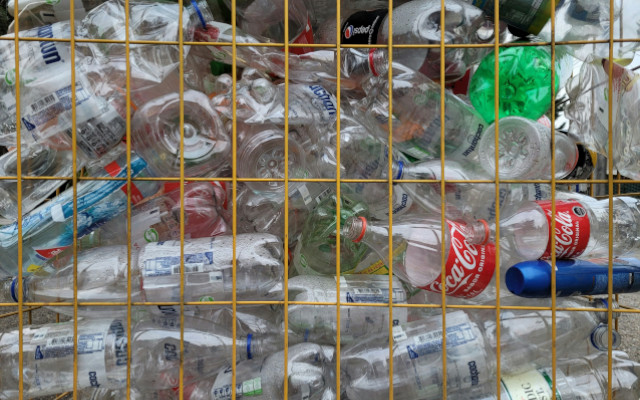
Picture of Killari Hotaru su Unsplash
References
- Commission Regulation (EU) 2022/1616 of 15 September 2022 on recycled plastic materials and articles intended to come into contact with foods, and repealing Regulation (EC) No 282/2008. Consolidated text: 03/16/2025 http://data.europa.eu/eli/reg/2022/1616/2025-03-16
- Commission Regulation (EU) No 10/2011 of 14 January 2011 on plastic materials and articles intended to come into contact with food. Consolidated text: 03/16/2025 http://data.europa.eu/eli/reg/2011/10/2025-03-16
- Directive (EU) 2024/825 of the European Parliament and of the Council of 28 February 2024 amending Directives 2005/29/EC and 2011/83/EU as regards empowering consumers for the green transition through better protection against unfair practices and through better information http://data.europa.eu/eli/dir/2024/825/oj
- Dongo, D. (2023, March 23). Green Claims Directive: Brussels's weak proposal against greenwashing. FT (Food Times). https://www.foodtimes.eu/it/consumatori-e-salute/green-claims-directive-la-debole-proposta-di-bruxelles-contro-il-greenwashing/
- Italian Republic. Legislative Decree 6 September 2005, No. 206. Consumer Code. Normattiva (last updated on 24/02/2025) https://www.normattiva.it/uri-res/N2Ls?urn:nir:stato:decreto.legislativo:2005-09-06;206